
Why Kihei Air Conditioners Corrode in Salt Air
Living near the ocean is one of the best parts of life in Kihei. But the same sea breeze that keeps Maui beautiful can slowly damage your air conditioner.
Short answer: Ocean breezes carry salt onto outdoor AC units in Kihei. When salt mixes with moisture, it speeds up corrosion of coils, screws, and electrical parts. Regular AC maintenance helps catch damage early.
Salt in the air can settle on your outdoor AC unit, wear down metal parts, and affect how well your system cools your home.
The good news? With the right care, you can help protect your AC and reduce the risk of costly repairs.
Why Salt Air Is Hard on Kihei AC Units
Kihei's coastal setting brings warm weather, ocean breezes, and salt in the air.
As the wind moves inland, it carries tiny salt particles. These particles can settle on the metal parts of your outdoor air conditioner.
When salt mixes with moisture, it speeds up corrosion. Over time, this can weaken the metal and damage parts that help your AC run.
Homes close to the beach may face more exposure, but salt air can also reach homes farther inland. Wind, weather, and the location of your outdoor unit all play a role.
Which AC Parts Can Salt Air Damage?
Salt-air corrosion can affect several key parts of your cooling system.
Condenser Coils
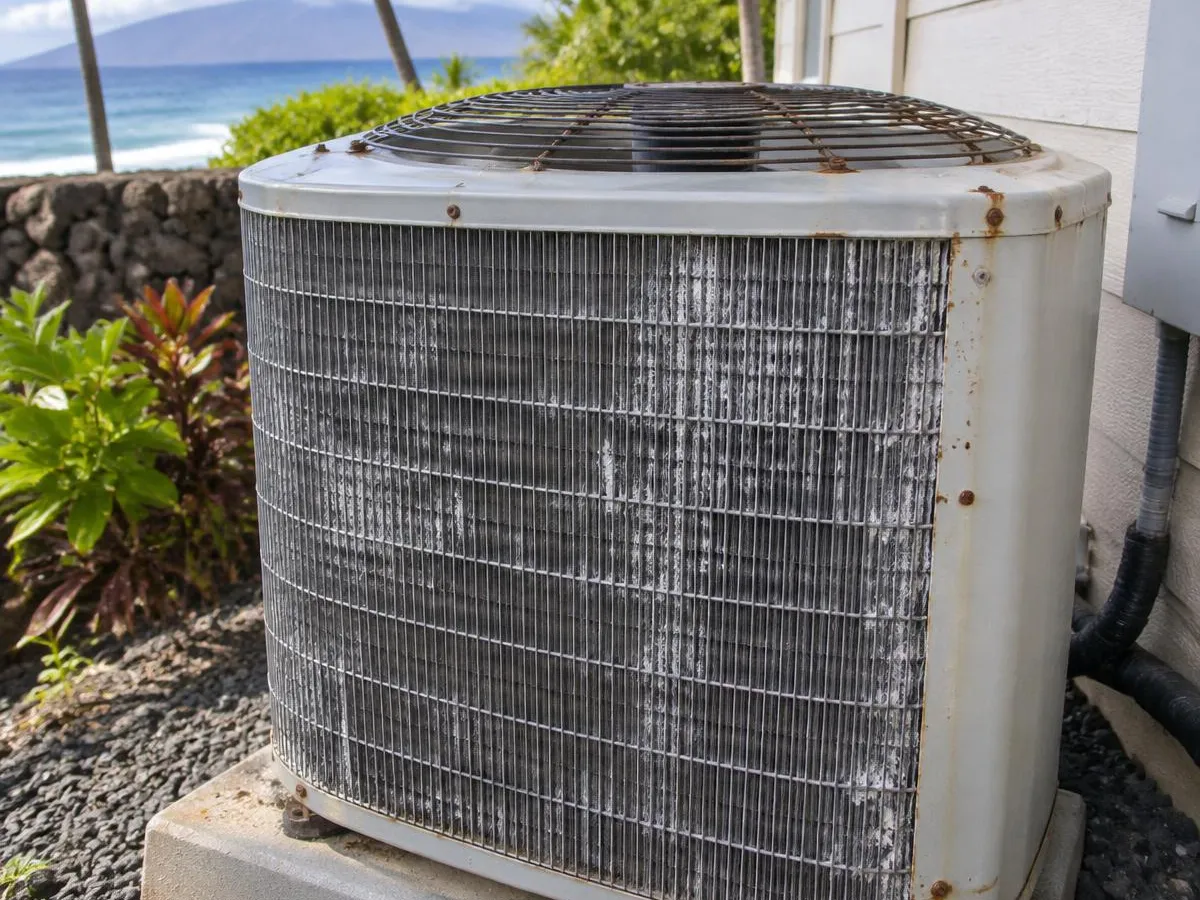
Your outdoor coils help release heat from your home. Salt buildup and corrosion can damage the thin metal fins, making it harder for the unit to work as designed.
Metal Cabinets and Screws
Rust can form on the outer cabinet, screws, and brackets. As corrosion spreads, these parts may become weak.
Electrical Connections
Salt and moisture can damage electrical contacts. This may lead to poor connections, system faults, or sudden AC problems.
Refrigerant Lines and Coils
Severe corrosion can cause small leaks in some metal components. When refrigerant leaks, your AC may struggle to cool your home.
Signs Your Kihei AC May Have Corrosion
Watch for these warning signs:
- Rust on the outdoor AC cabinet
- White or gray buildup on metal fins
- Weak cooling or longer run times
- Higher electric bills without a clear cause
- Unusual noises from the outdoor unit
- Frequent AC repair needs
These signs do not always mean salt corrosion is the cause. A trained technician can inspect your system and find the source of the problem.
If your AC is not cooling well, schedule an inspection before a small issue becomes a larger repair. See our AC repair in Kihei service.
How to Protect Your AC From Salt Air
A few smart steps can help reduce the damage caused by coastal air.
Schedule Regular AC Maintenance
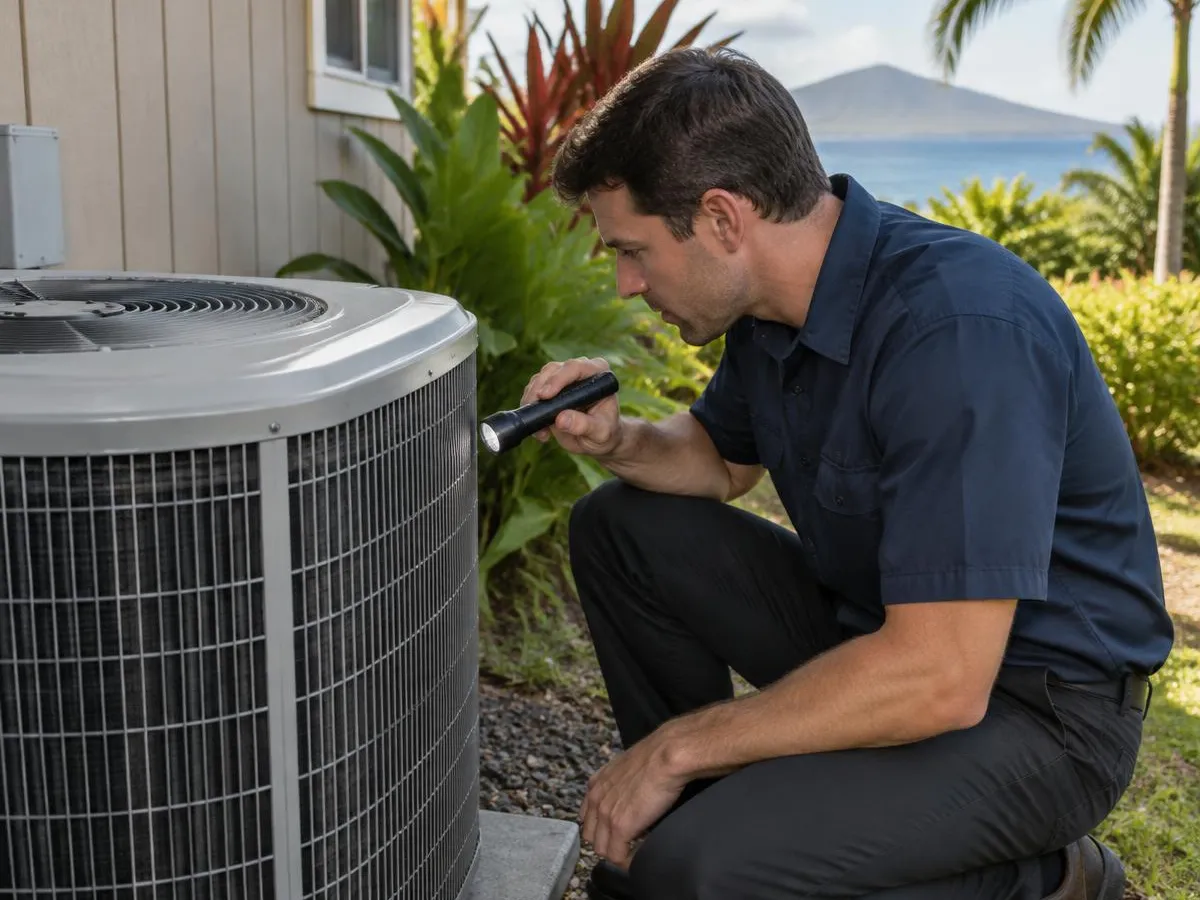
Professional AC maintenance helps catch rust, buildup, and worn parts early. Homes with heavy salt exposure may need more frequent inspections than homes farther from the coast.
Keep the Outdoor Unit Clear
Remove leaves, weeds, and other debris near your condenser. Good airflow helps your system release heat.
Clean the Unit the Right Way
Salt deposits may need to be removed more often in coastal areas. Follow your AC maker's cleaning instructions and ask a technician about safe cleaning methods.
Avoid pressure washers and harsh chemicals that can damage the coils.
Ask About Coastal-Resistant Equipment
If you need a new air conditioner, ask about models designed for coastal use.
Some units have special coatings and parts that resist corrosion better than standard equipment.
When Should You Call for AC Repair in Kihei?
If your air conditioner shows rust, leaks, weak cooling, or repeated faults, it may be time for professional service.
Early AC repair can help prevent further damage. It can also help you decide whether a repair or a new system makes more sense.
Dakine Air Conditioning can help you assess your cooling needs and discuss practical service options for your Kihei home.
Frequently Asked Questions
Does Salt Air Damage Air Conditioners in Kihei?
Yes. Salt carried by ocean breezes can settle on outdoor AC parts. When it mixes with moisture, it can speed up corrosion and shorten the life of some components.
How Often Should Coastal AC Units Be Serviced?
Most systems need at least annual professional maintenance. Homes with heavy salt exposure may need more frequent inspections or cleaning based on the equipment maker's guidance.
Can Salt Corrosion Be Removed From an AC Unit?
Some surface buildup can be cleaned, but severe metal damage may not be reversible. A technician can check whether cleaning, repair, or replacement is needed.
Are Coastal AC Units Worth Considering?
Yes, especially for homes with strong salt-air exposure. Coastal-resistant models may offer added protection, though no AC unit is fully immune to corrosion.
Can Salt Air Cause an AC Refrigerant Leak?
Yes. Over time, severe corrosion may damage coils or tubing and lead to leaks. Not every refrigerant leak is caused by salt air.
Protect Your Kihei Home's Cooling System
Salt air is part of life in coastal Maui, but early care can help reduce the damage it causes.
Whether your AC needs maintenance, repair, or an expert inspection, Dakine Air Conditioning is here to help you explore the right next step.
Serving Kihei and Maui homeowners.